
You may be ready to consider LASIK if glasses or contact lenses regularly interfere with your routine, your prescription is stable and you want greater visual freedom.
Here are five common signs that LASIK could fit your vision goals and lifestyle.
1. You depend on glasses throughout the day
Glasses provide effective vision correction, but relying on them from morning until night may feel inconvenient.
You might be ready to explore LASIK if you regularly:
- Search for your glasses as soon as you wake up
- Have difficulty seeing clearly without them
- Carry a spare pair in case yours is lost or damaged
- Deal with lenses fogging in cold weather
- Find that frames become uncomfortable during long days
- Remove or adjust your glasses during physical activities
- Avoid certain activities because of your glasses
LASIK reshapes the cornea to correct refractive errors such as myopia, hyperopia and astigmatism. Its purpose is to reduce dependence on corrective lenses, although the degree of freedom from glasses varies between patients.
The relevant question is not whether glasses work. It is whether you would value being able to complete more of your routine without them.
2. Contact lenses have become inconvenient or uncomfortable
Contact lenses can provide clear vision without frames, but they require ongoing cleaning, replacement and daily handling.
You may be interested in LASIK if contact lenses:
- Become uncomfortable later in the day
- Feel dry during screen work
- Irritate your eyes in heated or air-conditioned rooms
- Interfere with travel or outdoor activities
- Require supplies that are inconvenient to carry
- No longer fit comfortably into your routine
- Make your vision fluctuate as the day progresses
Contact-lens discomfort can sometimes be associated with an unstable tear film or another ocular-surface concern. Tell the clinical team about any dryness, burning, watering or fluctuating vision during your assessment.
Having dry-eye symptoms does not automatically make you ineligible for vision correction. Your eyes may need to be assessed and treated before a recommendation can be made. Lumea’s guide to LASIK candidacy with dry eyes explains how ocular-surface health influences the decision.

3. Your prescription has remained stable
A stable prescription is an important part of LASIK candidacy.
If your glasses or contact-lens prescription has changed very little over the past year or longer, it may be a good time to ask whether you qualify for treatment. A stable prescription helps the surgeon plan a correction that reflects your current visual needs.
Signs of reasonable stability may include:
- Recent eye examinations have produced similar prescriptions
- You have not needed frequent changes to your lenses
- Your current glasses continue to provide consistent distance vision
- Your vision has not noticeably shifted over a short period
You cannot confirm stability based on how your vision feels alone. The clinical team will compare current measurements with previous prescriptions and consider your age, health and eye history.
4. Glasses or contacts interfere with work, sports or travel
Corrective lenses may be particularly inconvenient during an active day.
You might consider LASIK if glasses or contact lenses regularly interfere with:
- Running or fitness training
- Skiing, cycling or hiking
- Swimming and water-based activities
- Wearing protective eyewear
- Working in rain, dust or changing temperatures
- Frequent travel
- Early mornings or long workdays
- Caring for children during the night
For some people, the appeal of LASIK is not simply waking up with clearer vision. It is being able to move through these situations with less preparation and fewer visual aids.
Your occupation and activities should be discussed during the assessment. Certain jobs have specific visual standards, while activities with a greater chance of eye contact may influence which vision-correction procedure is recommended.
LASIK is one option among several. Depending on your corneas, prescription and lifestyle, the surgeon may discuss PRK, SMILE or another procedure. Lumea’s comparison of PRK and LASIK explains how these treatments differ.
5. You want greater freedom from corrective lenses
A clear personal reason for considering treatment is one of the strongest signs that it is time to arrange a consultation.
LASIK may be worth exploring if you want to:
- See the alarm clock more clearly when you wake up
- Exercise without glasses moving or fogging
- Travel with fewer vision-care supplies
- Reduce your daily contact-lens routine
- Wear non-prescription sunglasses more easily
- Feel less dependent on corrective lenses during everyday activities
LASIK is intended to reduce dependence on glasses or contacts. It should not be presented as a promise that a person will never need glasses again.
The natural eyes continue to change over time. Adults may eventually need reading glasses because of presbyopia, and later prescription changes may also affect vision. These possibilities should be included in a realistic discussion of your goals.
Signs that you may be a suitable LASIK candidate
Lifestyle interest is only one part of the decision. Your eyes must also be suitable for treatment.
A potentially suitable candidate is generally:
- At least 18 years old
- Living with a sufficiently stable prescription
- Within the treatment range for their refractive error
- In suitable overall eye health
- Able to complete the recommended aftercare
- Interested in reducing dependence on glasses or contacts
- Comfortable with realistic treatment goals
A consultation is still required because candidacy also depends on measurements that cannot be evaluated at home.
The American Academy of Ophthalmology identifies factors such as prescription stability, corneal health and realistic expectations as important parts of LASIK candidacy.
What does a LASIK assessment check?
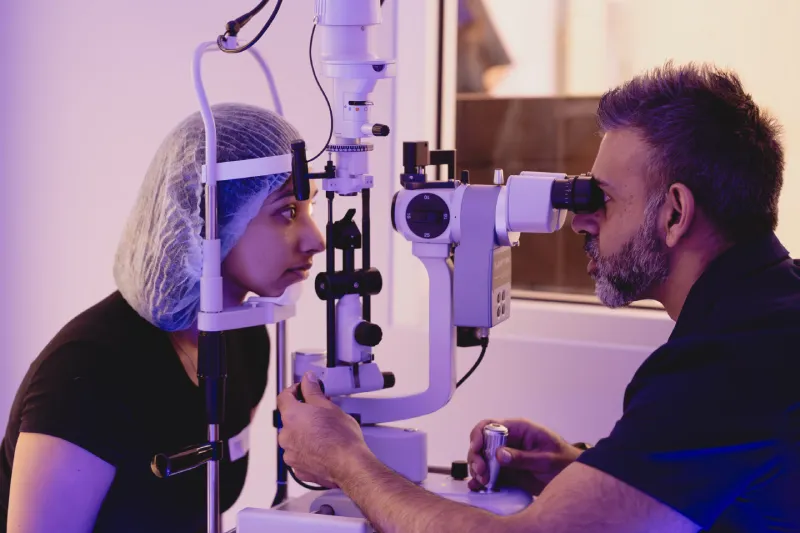
A LASIK consultation is a detailed examination rather than a simple vision test.
The clinical team may evaluate:
- Your current prescription
- Previous prescription changes
- Corneal shape and thickness
- Tear-film stability
- Pupil measurements
- Eyelid and ocular-surface health
- Eye pressure
- The health of the retina and natural lens
- Previous eye procedures
- Relevant medications and health conditions
- Your work, driving and recreational needs
These findings help determine whether LASIK is suitable and whether another form of vision correction may provide a better match.
You can review the general factors involved on Lumea’s vision-correction candidacy page.
What conditions can LASIK correct?
LASIK may be used to correct common refractive errors.
Myopia
Myopia, commonly called nearsightedness, causes distant objects to appear blurry while closer objects may remain clearer.
Hyperopia
Hyperopia, or farsightedness, can affect near vision and sometimes distance vision, depending on the prescription and the person’s age.
Astigmatism
Astigmatism occurs when the eye’s focusing surface has an irregular curvature, causing vision to appear blurred or distorted at different distances.
An assessment is required to determine whether the type and degree of your prescription fall within the range that can be treated.
Does needing a stronger prescription mean you need LASIK?
No. A stronger prescription does not automatically mean that LASIK is necessary or appropriate.
Someone with a relatively mild prescription may value treatment because glasses interfere with daily activities. Another person with a stronger prescription may be completely comfortable continuing with corrective lenses.
Prescription strength also does not establish candidacy by itself. Corneal measurements, eye health, tear-film quality and other clinical findings must be considered.
When might another vision-correction procedure be considered?
LASIK is not the only way to reduce dependence on glasses or contacts.
The surgeon may discuss another procedure if your eye measurements, prescription or visual goals make it more appropriate. Options may include:
- PRK
- SMILE
- Implantable collamer lenses
- PRESBYOND LASIK for selected patients with presbyopia
- A lens-based procedure when clinically appropriate
For example, someone with a thin or irregular cornea may require a different approach. Lumea’s article about LASIK alternatives for thin corneas explains why the recommendation depends on individual measurements.
The purpose of an assessment is not merely to confirm LASIK. It is to identify the most suitable option for your eyes.
Questions to ask at your consultation
Before deciding, consider asking:
- Is my prescription stable enough for treatment?
- Are my corneas suitable for LASIK?
- Is my tear film healthy?
- Which procedure best fits my prescription?
- What level of independence from glasses can I reasonably expect?
- How might my age affect near vision?
- Would my occupation or favourite activities affect the recommendation?
- How should I prepare for treatment?
- What does the follow-up schedule involve?
- Could another procedure suit me better?
Clear answers will help you evaluate LASIK based on your eyes and priorities.
The bottom line
The five clearest signs that LASIK may be worth considering are:
- You rely on glasses throughout the day.
- Contact lenses have become inconvenient or uncomfortable.
- Your prescription has remained stable.
- Corrective lenses interfere with work, activities or travel.
- You want greater visual freedom and have realistic expectations.
These signs do not mean that you medically need LASIK or confirm that you qualify. They indicate that a professional assessment may be a useful next step.
Learn more about LASIK eye surgery or arrange a consultation at one of Lumea’s Toronto, Vaughan or Barrie clinics.
Frequently asked questions
How do I know if I need LASIK?
LASIK is elective, so it is more accurate to ask whether it could improve your daily life. If you want to depend less on glasses or contacts, an assessment can determine whether your eyes are suitable.
Do I need a strong prescription to get LASIK?
No. People with mild, moderate or stronger prescriptions may be eligible, depending on the treatment range and their eye measurements.
Can LASIK correct astigmatism?
LASIK can correct many forms of regular astigmatism. The amount and pattern must be measured before the surgeon can confirm your options.
Can I get LASIK if my prescription recently changed?
A changing prescription may mean that treatment should be postponed. Bring previous prescriptions to your consultation so the clinical team can evaluate stability.
Can I get LASIK if contact lenses make my eyes dry?
Possibly. Contact-lens discomfort does not automatically rule out LASIK, but your tear film and ocular surface should be assessed before treatment is recommended.
Is LASIK only for people who cannot wear contact lenses?
No. Some people choose LASIK because contacts are uncomfortable, while others simply prefer a lifestyle with less dependence on corrective lenses.
Will I ever need glasses after LASIK?
LASIK can substantially reduce reliance on glasses, but future use remains possible. Some people use glasses for particular tasks, and many adults eventually need help with close vision as presbyopia develops.
What is the first step?
The first step is a comprehensive vision-correction assessment. The clinical team can examine your eyes, discuss your routine and determine whether LASIK or another option is suitable. You can contact Lumea to arrange a consultation.