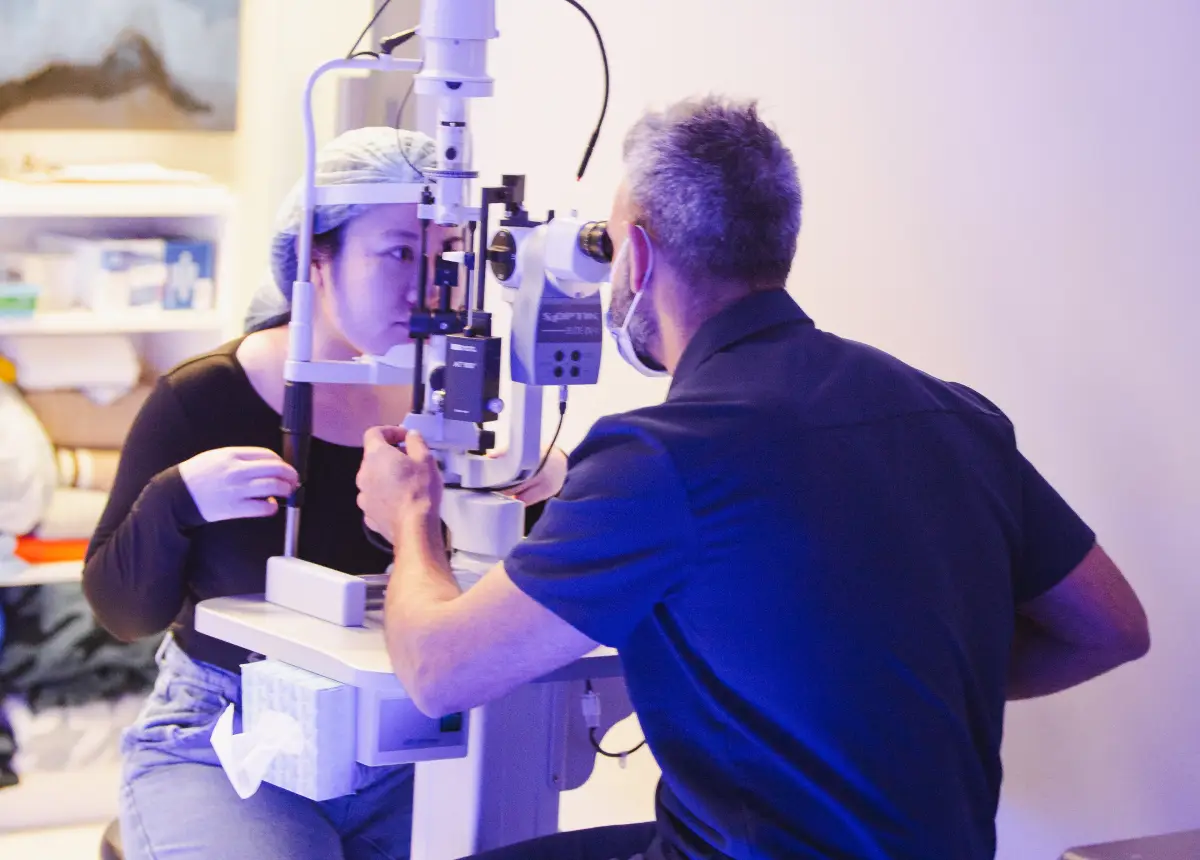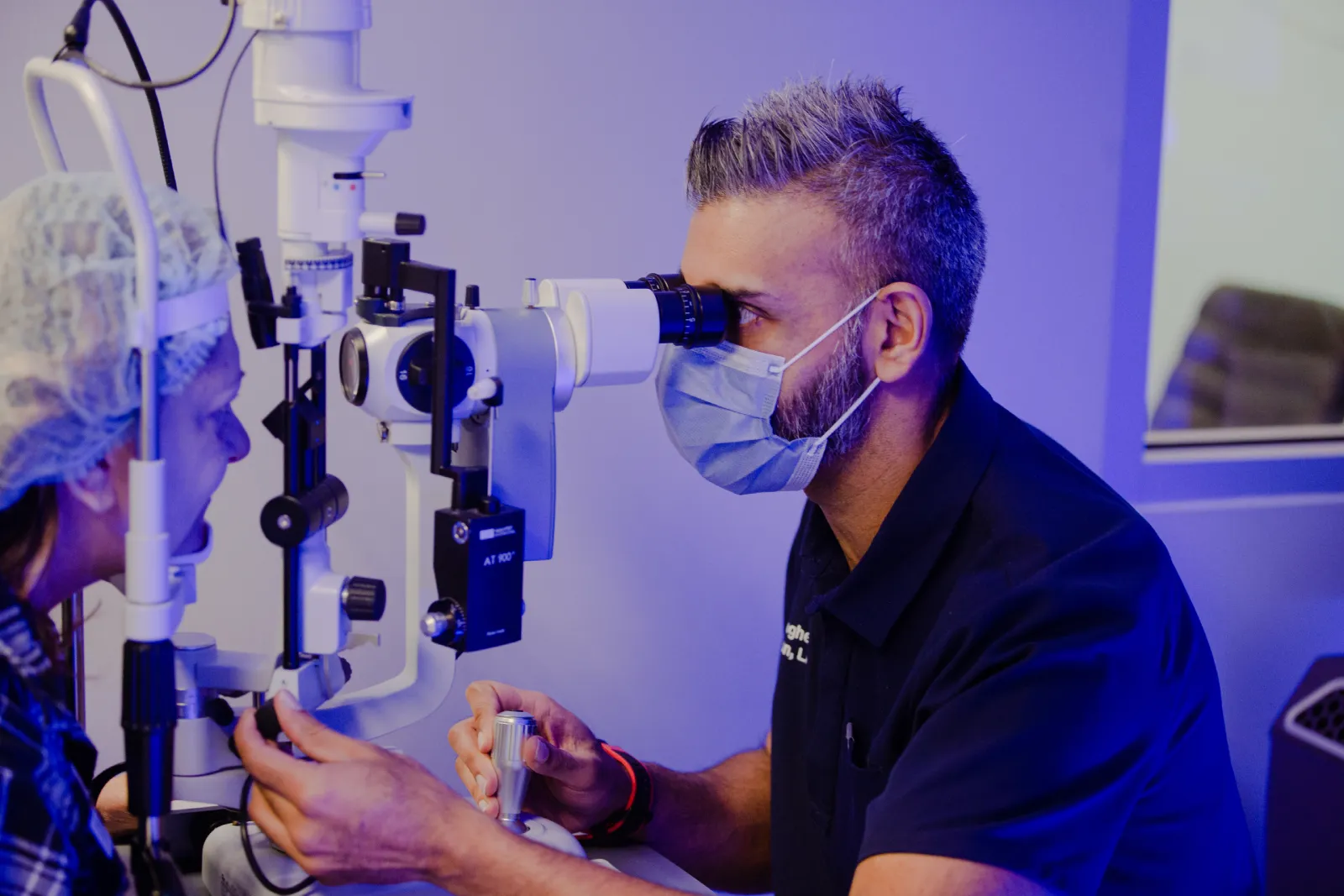

PRK and LASIK both reshape the cornea to correct eligible refractive errors, but they reach the treatment area differently. LASIK creates a thin corneal flap, while PRK treats the surface without creating a flap.
LASIK usually provides faster early visual recovery. PRK generally requires a longer initial healing period, but it may be considered when a person’s corneal measurements or lifestyle make a surface procedure more appropriate.
The only way to determine which procedure may suit your eyes is through a detailed assessment. Prescription, corneal shape, corneal thickness, eye health and recovery needs must all be considered.
PRK vs. LASIK at a Glance
The main difference between PRK and LASIK is how the surgeon accesses the corneal tissue that must be reshaped. This difference influences early recovery, discomfort and candidacy.
The following table provides a simple comparison. It does not replace an individual eye assessment.
| Feature | PRK | LASIK |
| Surgical approach | Surface treatment | Flap-based treatment |
| Corneal flap | No | Yes |
| Laser used to reshape the cornea | Excimer laser | Excimer laser |
| Early recovery | More gradual | Usually faster |
| Initial discomfort | Common during surface healing | Usually shorter-lasting |
| Potential candidacy consideration | May be considered for some thinner or irregular corneas | Requires suitable corneal thickness and shape |
| Final decision | Based on complete testing | Based on complete testing |
How does PRK work?
PRK eye surgery is a surface-based laser procedure. It reshapes the cornea to change how light focuses inside the eye.
The treatment involves several carefully planned stages:
- Surface preparation: The thin outer layer of corneal cells, called the epithelium, is removed from the treatment area.
- Laser reshaping: An excimer laser reshapes the underlying corneal tissue according to the patient’s treatment plan.
- Surface healing: The epithelial cells regenerate during the initial recovery period.
- Follow-up care: The clinical team monitors healing and removes the bandage lens when appropriate.
Because the surface must regenerate, discomfort and blurred or fluctuating vision can occur during early recovery.
How does LASIK work?
LASIK eye surgery also uses an excimer laser to reshape the cornea. However, the surgeon first creates a thin corneal flap.
The main stages include:
- Creating the flap: A femtosecond laser creates a thin flap in the cornea.
- Accessing the treatment area: The flap is carefully moved aside.
- Reshaping the cornea: An excimer laser performs the planned correction.
- Replacing the flap: The flap is returned to its original position.
- Beginning recovery: The flap acts as a natural covering while the eye heals.
The flap allows the surface to remain largely intact. This is why early visual recovery after LASIK is generally faster than after PRK.
Which procedure has a faster recovery?
LASIK normally has a faster initial recovery because the corneal surface does not need to regenerate in the same way. PRK patients usually need more time before vision becomes comfortable and useful for everyday activities.
Recovery differs between patients, but the general comparison is:
PRK recovery
PRK recovery occurs in stages. The surface heals first, while visual clarity can continue changing over several weeks.
Patients may experience:
- Discomfort during the first several days.
- Light sensitivity and tearing.
- Blurred or fluctuating vision.
- Gradual visual improvement over the following weeks.
- Glare, halos or dry-eye symptoms during healing.
LASIK recovery
LASIK recovery is generally quicker during the first several days. Many patients notice useful vision relatively early, although complete healing still takes time.
Patients may experience:
- Temporary irritation or a foreign-body sensation.
- Dry-eye symptoms.
- Glare or halos, particularly at night.
- Fluctuating vision during early recovery.
- Temporary activity restrictions.
- Continued follow-up while vision stabilizes.
Faster recovery does not mean LASIK is automatically the more appropriate procedure. Candidacy must be established through testing.
Is PRK better for thin corneas?
PRK may be considered for some people whose corneas are less suitable for LASIK. Because PRK does not require the creation of a flap, its effect on corneal tissue differs from LASIK.
However, PRK is not automatically safe for every thin cornea. Important factors include:
- Overall corneal thickness.
- Corneal shape and regularity.
- The amount of correction required.
- The estimated remaining corneal tissue.
- Prescription stability.
- Signs of corneal weakness or disease.
- General eye and surface health.
What vision problems can PRK and LASIK address?
Both procedures may correct eligible refractive errors by changing the shape of the cornea. The suitable range depends on the procedure, equipment and the patient’s measurements.
Conditions that may be treated include:
- Myopia: Nearsightedness that causes distant objects to appear blurred.
- Hyperopia: Farsightedness that can affect near or distance vision.
- Astigmatism: Irregular focusing caused by the shape of the cornea or lens.
A prescription number alone cannot confirm eligibility. Lumea’s article about higher prescriptions and laser eye surgery explains why corneal measurements and eye health also matter.
Who may be considered for PRK?
PRK may be discussed when the examination shows that a surface procedure could be more appropriate than a flap-based procedure. The decision must be based on complete clinical findings.
Possible considerations include:
- Corneas that may be less suitable for LASIK.
- Certain irregularities in corneal shape.
- A stable and treatable prescription.
- Healthy eyes and a healthy corneal surface.
- Activities or occupations with an increased possibility of eye trauma.
- Realistic expectations about recovery and results.
- Willingness to accept a more gradual initial recovery.
These factors do not guarantee candidacy. Some corneal findings can make every corneal laser procedure unsuitable.
Who may be considered for LASIK?
LASIK may be considered when the cornea can safely support flap creation and the planned laser correction. The person must also meet the broader requirements for refractive surgery.
Possible considerations include:
- Suitable corneal thickness and shape.
- A stable, treatable prescription.
- Healthy eyes and tear film.
- A preference for faster early visual recovery.
- Realistic expectations about the procedure.
- No condition that would create an unacceptable healing risk.
People with dry-eye symptoms require careful assessment because LASIK can temporarily affect the tear film. Read Can I Get LASIK If I Have Dry Eyes? for more information.
What are the risks of PRK and LASIK?
Both PRK and LASIK involve real risks, possible side effects and limitations. The type and relevance of each risk depend on the patient and procedure.
Possible shared considerations include:
- Temporary dry-eye symptoms.
- Glare, halos or starbursts.
- Fluctuating vision.
- Infection or inflammation.
- Under- or overcorrection.
- Continued need for glasses for some tasks.
- Rare changes affecting visual quality.
PRK also involves surface healing considerations, including possible corneal haze. LASIK has flap-related considerations that do not apply to PRK.
No procedure can guarantee perfect vision or permanent freedom from glasses.
What if neither PRK nor LASIK is suitable?
Not qualifying for PRK or LASIK does not always mean that vision correction is impossible. Lumea offers several procedures with different candidacy requirements.
Depending on age, prescription and eye anatomy, the clinical team may discuss:
- SMILE laser vision correction.
- ICL surgery.
- Another vision correction procedure.
- Treating an eye-surface condition before repeating measurements.
- Continuing with glasses or contact lenses.
The goal is to identify an appropriate option rather than force every patient into laser treatment.
The bottom line
PRK and LASIK use laser technology to reshape the cornea, but they use different surgical approaches. LASIK creates a flap and normally provides faster early recovery, while PRK treats the corneal surface and may be considered for some patients whose eyes or activities make LASIK less suitable.
The next step does not need to be surgery. It can be a detailed conversation about your eyes, options and expectations.
Request a consultation with Lumea to learn which vision correction procedures may be appropriate for you.
Frequently asked questions
These answers summarize common questions about PRK and LASIK. They cannot determine individual candidacy.
A full examination is required before a procedure can be selected.
Is PRK safer than LASIK?
Neither procedure is universally safer for every patient. Safety depends on selecting an appropriate procedure based on corneal measurements, prescription and eye health.
Does PRK give better vision than LASIK?
Both procedures may provide effective correction for eligible patients. The expected result depends more on candidacy, treatment planning and healing than the procedure name alone.
Which procedure is more painful?
PRK generally involves more discomfort during the first several days because the corneal surface must regenerate. LASIK commonly has less initial discomfort, although individual experiences vary.
Can PRK or LASIK prevent reading glasses?
Neither procedure prevents presbyopia, the age-related loss of near focus. Patients may still need reading glasses as they get older.