Yes, some people with dry eyes may still qualify for LASIK. Dry-eye symptoms do not automatically rule out laser vision correction. However, LASIK may not be the procedure your surgeon recommends first. At Lumea, our surgeons typically recommend SMILE for suitable patients with dry-eye concerns. SMILE does not require a LASIK flap and uses a much smaller corneal incision. This approach generally disturbs fewer corneal nerves during treatment, which may reduce its effect on the tear film during early recovery.
That does not mean SMILE prevents dry eye or suits every patient. Your surgeon must assess your dryness, prescription, corneal measurements and eye health. Some patients may still qualify for LASIK. Others may need dry-eye treatment first or may be better suited to another procedure.
Why does dry eye matter before LASIK?
The tear film is a thin layer of moisture covering the eye. It supports comfort and creates a smooth surface for clear vision. When it becomes unstable, you may experience burning, grittiness, watering or changing vision.
Dry eye matters before LASIK eye surgery for two main reasons.
First, an unhealthy tear film may make preoperative measurements less consistent. Those measurements help your surgeon plan the laser treatment, so the surface of the eye should be as stable as possible.
Second, LASIK can cause temporary dryness. Creating the flap affects nerves involved in sensation and tear-film control while the eye heals. Existing symptoms could become more noticeable after surgery.
LASIK vs. SMILE for dry eyes
Both LASIK and SMILE reshape the cornea to correct refractive errors. The main difference is how the surgeon reaches the tissue being treated.
| LASIK | SMILE |
| A femtosecond laser creates a thin corneal flap. | No corneal flap is created. |
| An excimer laser reshapes the tissue beneath the flap. | A laser creates a small piece of tissue called a lenticule. |
| The flap affects a wider area of corneal nerves. | The lenticule is removed through a small incision. |
| Temporary dryness can occur during recovery. | Temporary dryness can still occur, but the early effect on the ocular surface may be lower for some patients. |
Why Lumea may recommend SMILE
SMILE vision correction leaves more of the front corneal surface undisturbed than LASIK. Research has generally found less early loss of corneal sensation after SMILE. Some studies have also reported better short-term tear-film measurements or fewer dry-eye symptoms.
The difference is not absolute. One randomized study found greater early corneal nerve disruption after LASIK but no significant difference in the dry-eye symptoms reported by patients. Both procedures can cause temporary dryness, and individual recovery varies.
For this reason, Lumea’s recommendation is not that SMILE is automatically best for everyone. It is that SMILE may be a good fit when a patient has dry-eye concerns and also meets the clinical requirements for the procedure.
Can I still have LASIK with mild dry eye?
Possibly. Mild, occasional or well-managed dry eye does not always prevent LASIK. Your surgeon will look beyond the name of the condition and examine how well your tear film and corneal surface are functioning.
LASIK may remain an option when:
- Symptoms are mild and controlled.
- The corneal surface appears healthy.
- Tear-film measurements are stable.
- There is no significant eyelid inflammation.
- Your prescription and corneal measurements are suitable.
- Your surgeon believes the expected benefits outweigh the risks.
Severe or uncontrolled dry eye is more concerning because LASIK can make the condition worse. Surgery may need to be delayed while the ocular surface is treated. In some cases, the surgeon may advise against LASIK.
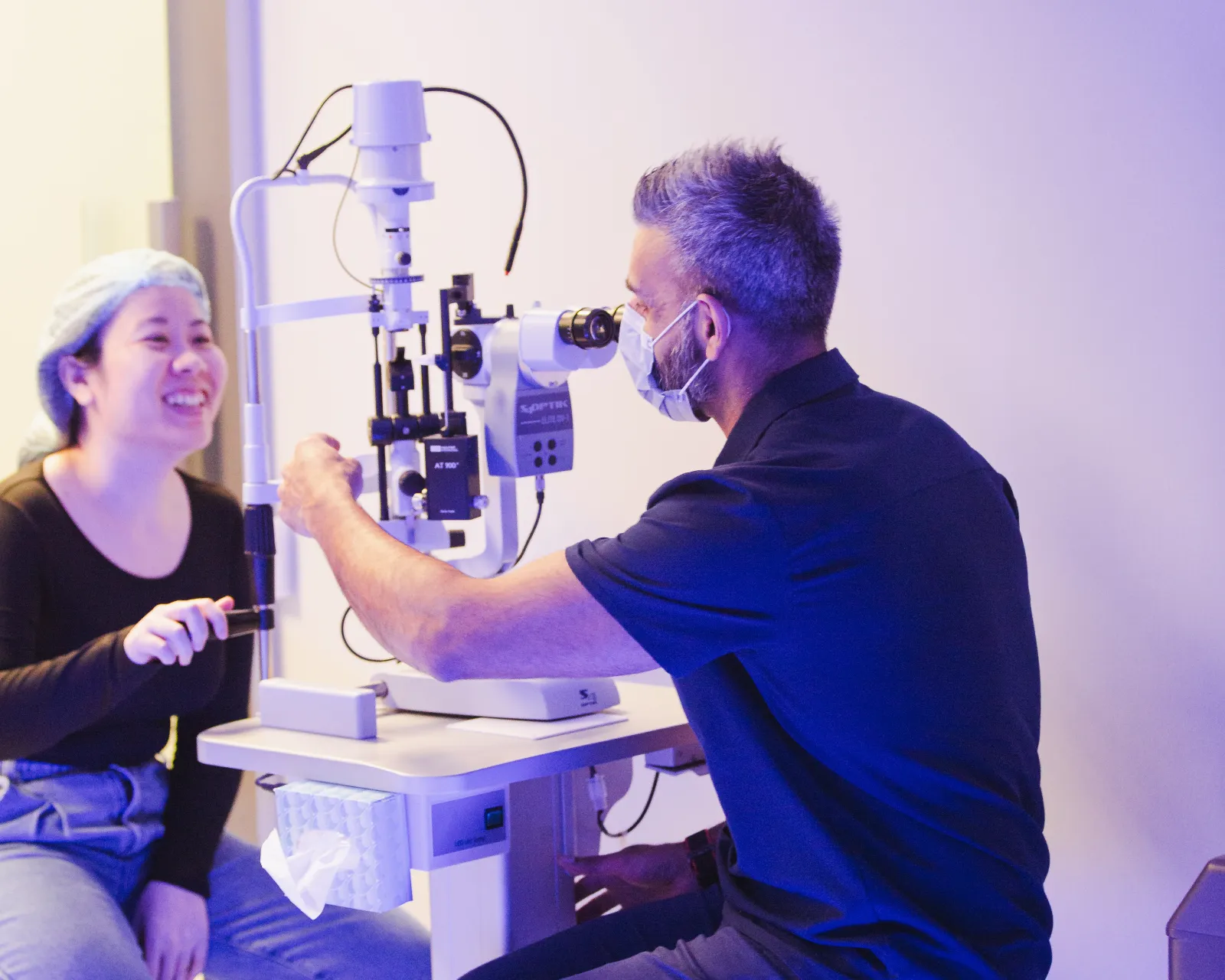
How are dry eyes assessed before laser eye surgery?
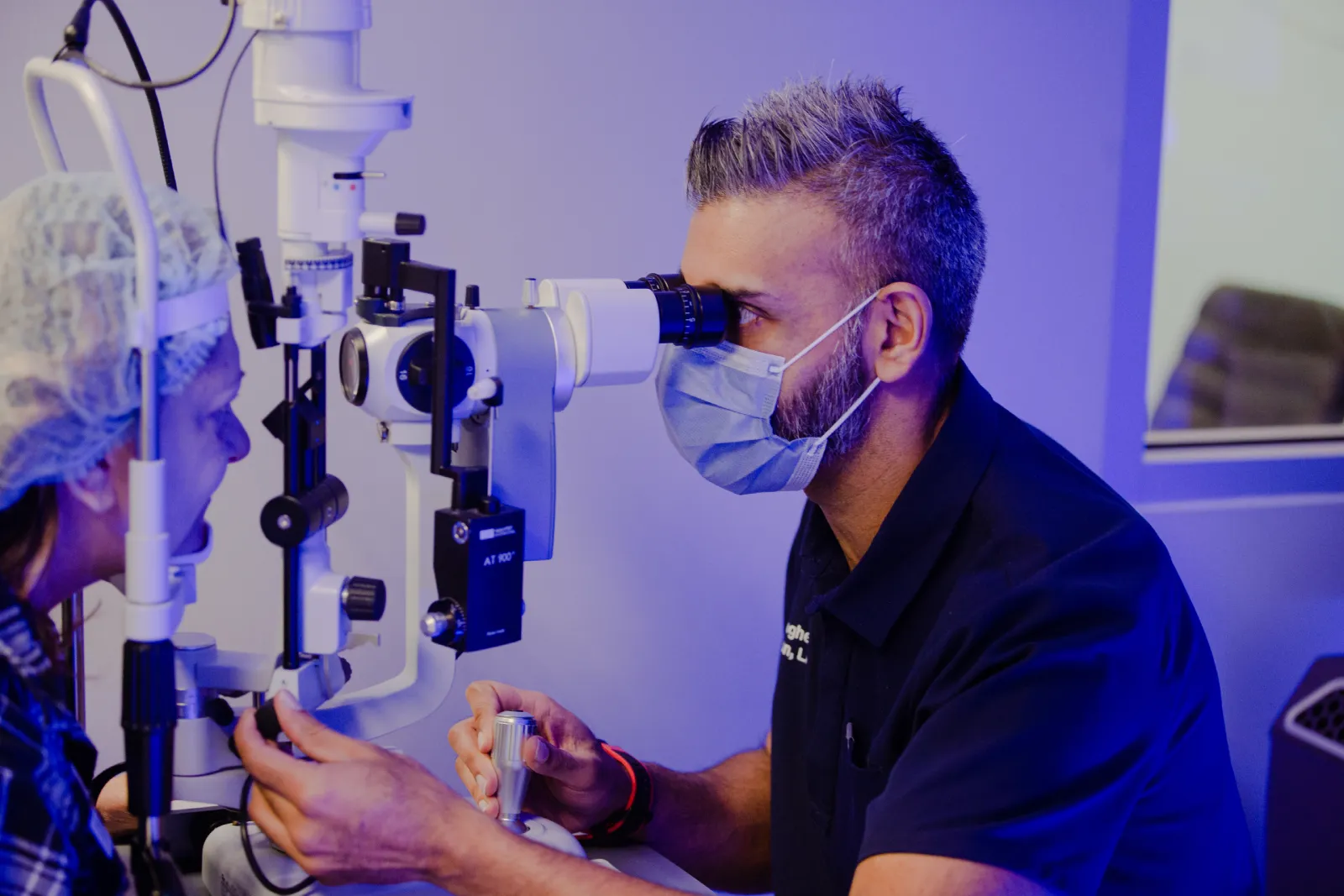
A consultation involves more than checking your prescription. The team may ask about burning, watering, fluctuating vision, screen use and contact-lens comfort. They will also review your health and medications.
Your assessment may include:
- Examining the cornea and tear film.
- Checking how quickly tears break up between blinks.
- Looking for dry areas or inflammation on the eye’s surface.
- Examining the eyelids and oil-producing meibomian glands.
- Measuring corneal shape and thickness.
- Reviewing whether your prescription is stable.
Testing is tailored to your symptoms and clinical findings. Lumea’s vision-correction candidacy information explains other factors considered before surgery, but only an examination can identify an appropriate procedure.
Can dry eye be treated before LASIK or SMILE?
The clinical team may first manage the cause of dryness and then repeat important measurements. There is no single treatment for every type of dry eye.
Management may include clinician-approved lubricating drops, changes to contact-lens wear, eyelid care or prescription therapy. Screen habits and dry indoor air may also need attention.
Do not change medication without speaking to an eye-care professional. The goal is a healthier, stable surface before choosing LASIK, SMILE or another option.
How will my surgeon choose between LASIK and SMILE?
Dry eye is only one part of the decision. Your surgeon will also consider your age, prescription, corneal anatomy, lifestyle and expectations.
You may be able to have LASIK after mild dryness is controlled. If you qualify for both procedures, Lumea’s surgeons typically recommend SMILE when dry eye is a concern because its flapless, small-incision approach generally affects fewer corneal nerves.
SMILE does not suit every prescription or cornea and can also cause temporary dryness. If neither procedure is appropriate, your surgeon may recommend further care or another option.
Take the next step with a complete assessment
So, can I get LASIK if I have dry eyes? The answer may be yes, but the safest choice depends on what is causing the dryness and how healthy and stable your eyes are.
Lumea offers LASIK surgery in Toronto, LASIK eye surgery in Vaughan and LASIK eye surgery in Barrie. The clinical team can explain whether LASIK remains possible or SMILE may be a better fit.
Request a consultation to receive a recommendation based on your tear film, prescription, corneal measurements and vision goals.
Frequently asked questions
Is SMILE always better than LASIK for dry eyes?
No. Lumea surgeons typically recommend SMILE for suitable patients with dry-eye concerns, but the best procedure depends on the complete examination. Some patients may still qualify for LASIK.
Will LASIK make my dry eyes worse?
LASIK can cause temporary dryness and may worsen existing symptoms. Your surgeon should assess your tear film and explain your risks. Read more about dry eye after LASIK.
Can SMILE cause dry eyes?
Yes. SMILE can cause temporary dryness even though it generally disturbs fewer corneal nerves than LASIK. No laser vision-correction procedure can guarantee that dry-eye symptoms will not occur.
Do I need to treat dry eye before surgery?
Treatment may be needed when dryness affects the corneal surface or the stability of your measurements. Your clinical team will decide when it is safe to proceed.
Can contact lenses make my eyes feel dry before LASIK?
Yes. Contact lenses can contribute to dryness. Tell the team what type you wear, how long you wear them and when discomfort begins. Follow Lumea’s instructions before measurements.
How do I know whether LASIK or SMILE is right for me?
A comprehensive consultation is required. The decision depends on your tear film, prescription, corneal anatomy, eye health and treatment goals—not dry-eye symptoms alone.