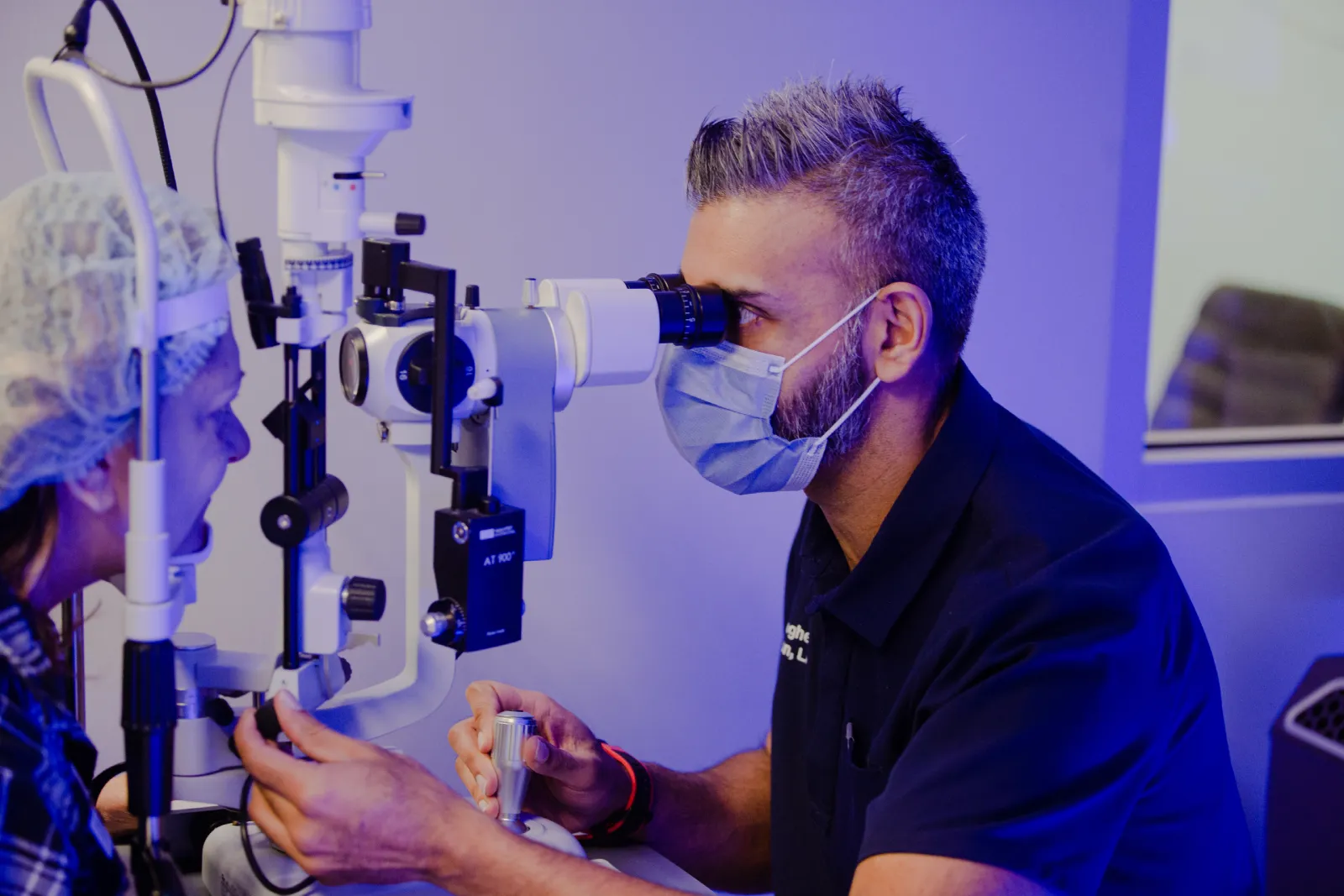
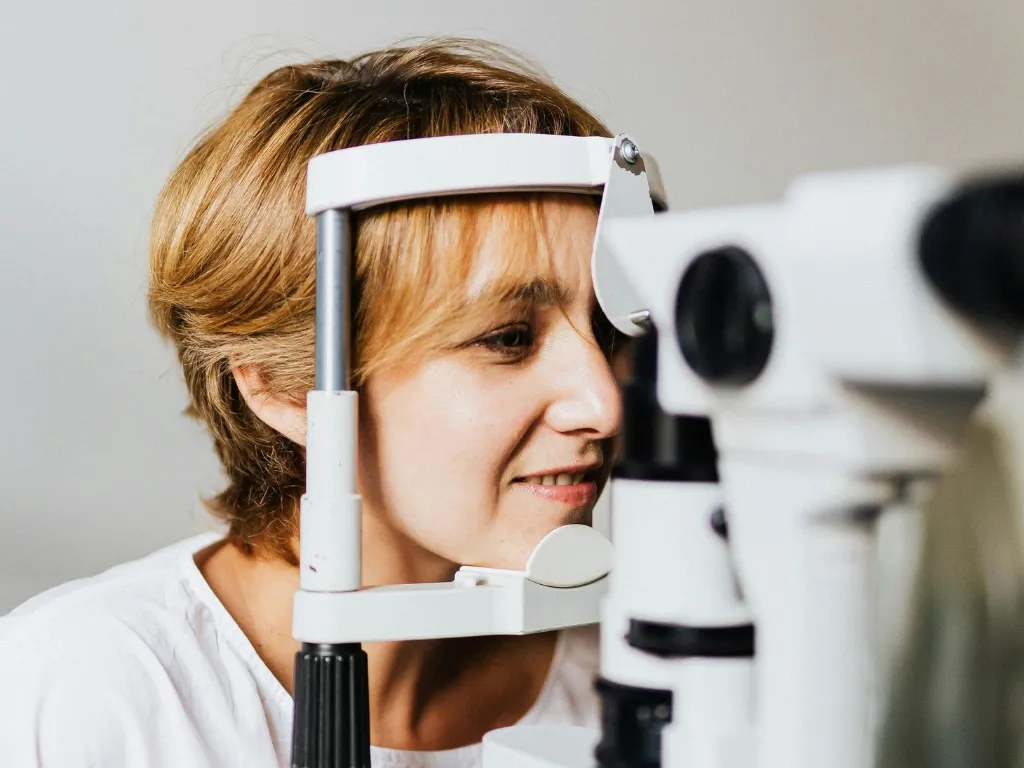
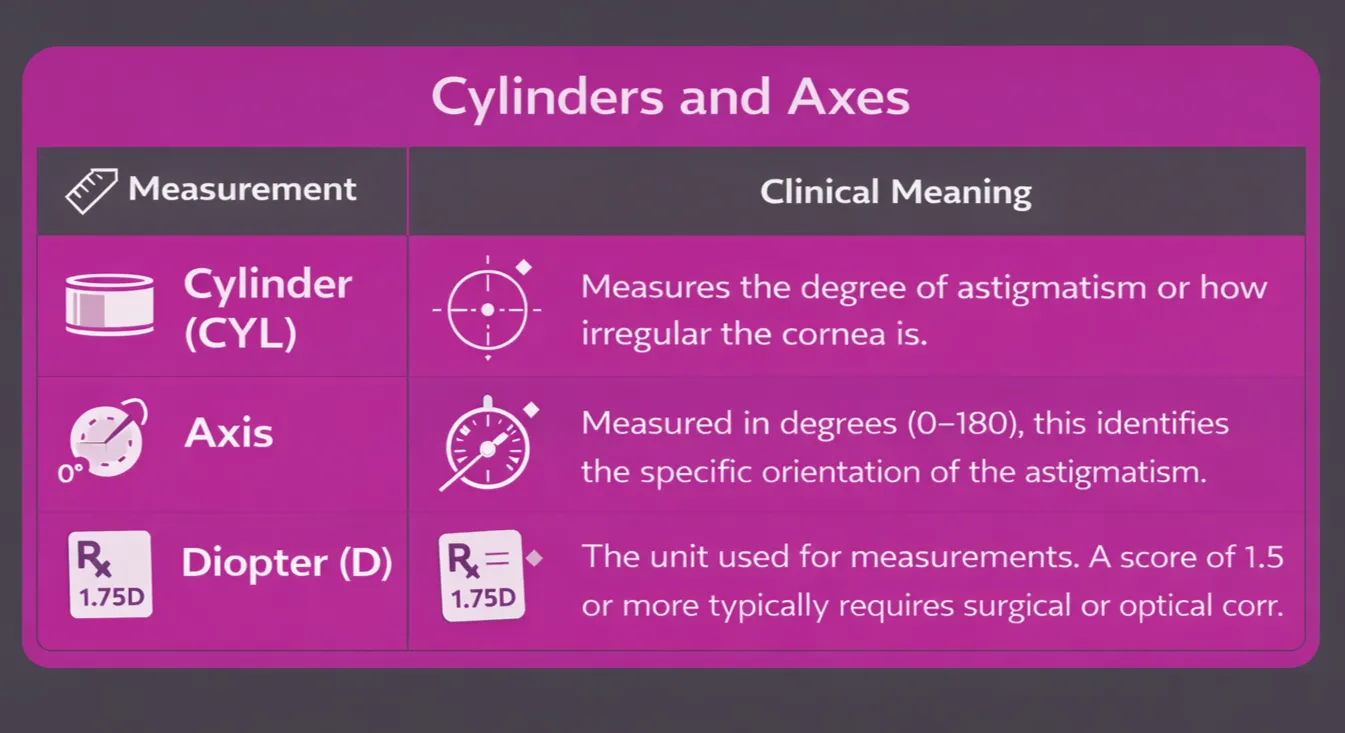
Clinical data show that a score of 1.5 diopters or more typically requires vision correction. To determine this value, specialists perform an astigmatism eye test using computer-controlled devices. These machines measure how light bends as it enters the eye without needing any verbal feedback. Diagnosing astigmatism at a surgical ophthalmology center is a routine clinical process. This ensures that every person gets a personalized vision plan.
Explore Specialized Surgical Correction Options
What happens during an Astigmatism eye test?
An astigmatism eye test uses specific clinical tools to map the eye surface. Consequently, this process ensures surgical-grade accuracy through the following steps:
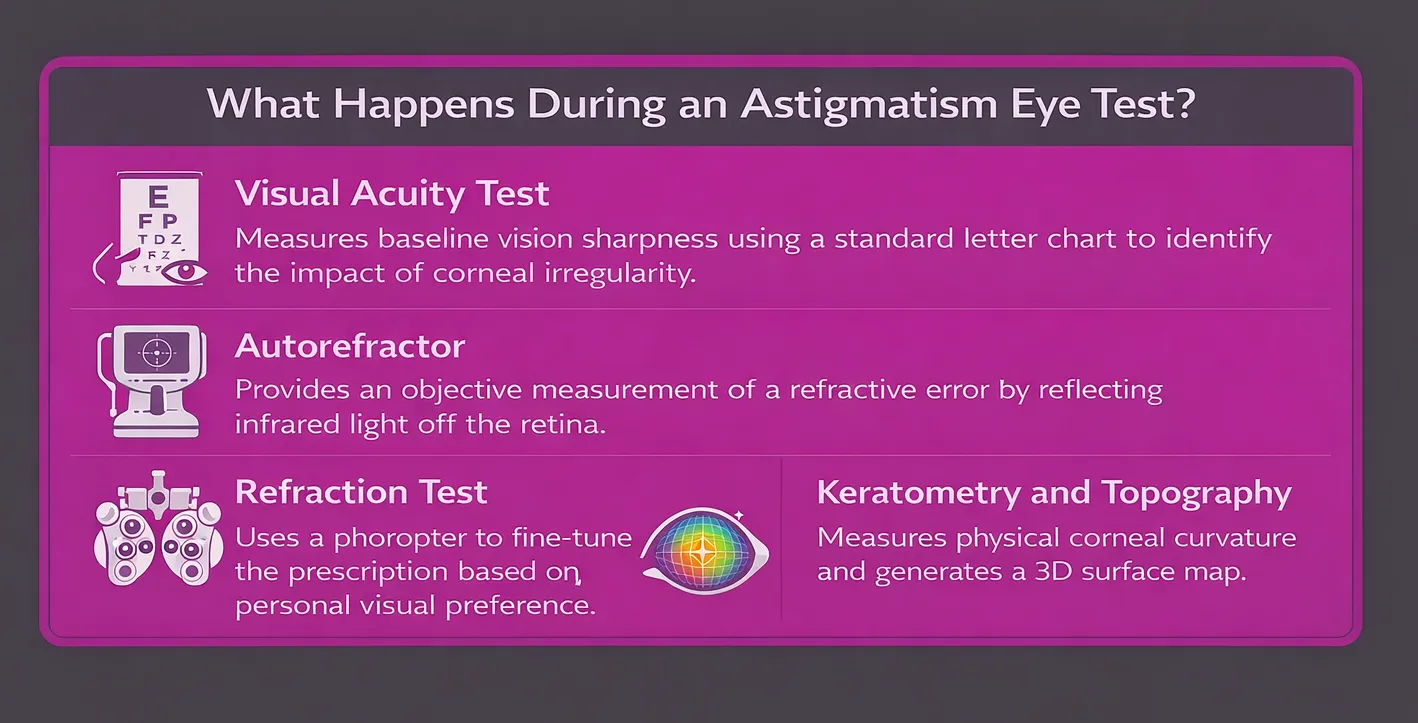
- Visual acuity test: Measures baseline vision sharpness using a standard letter chart to identify the impact of corneal irregularity.
- Autorefractor: Provides an objective measurement of a refractive error by reflecting infrared light off the retina. For this reason, it is a reliable tool that requires no verbal feedback.
- Refraction test: Uses a phoropter to fine-tune the prescription based on personal visual preference. Specifically, patients compare different lenses to achieve the clearest focus.
- Keratometry and topography: Measures physical corneal curvature and generates a 3D surface map. Thus, surgeons can identify subtle distortions for precise lens calculations.
Schedule your professional clinical assessment
Why accurate detection matters
Prioritizing a precise diagnosis is essential for long-term ocular health and quality of life. Consistent monitoring and accurate detection are necessary for:
- Preventing mblyopia: In children, uncorrected astigmatism in one eye can lead to “lazy eye” (amblyopia). This is a condition where vision fails to develop properly if not addressed early.
- Monitoring Keratoconus: Rapidly changing astigmatism can be a clinical sign of keratoconus. This occurs when the cornea thins and bulges into a cone shape.
- Improving daily performance: Clear vision supports safety for drivers on 400-series highways and improves focus for students and athletes.
- Reducing physical discomfort: Identifying the correct prescription is a primary way to resolve chronic headaches and eye fatigue caused by squinting.
Understanding your results: Cylinders and Axes
Following an astigmatism eye test, results are provided in a standardized format. These measurements help patients and an experienced surgical team stay informed about ocular health.
From diagnosis to clarity: Correction options
Once the diagnostic process is complete, a personalized vision plan is developed. While traditional corrections like toric soft lenses are common, many patients seek permanent surgical solutions.
The advanced surgical paths available at regional centers include:
- LASIK: A standard refractive procedure that uses lasers to reshape corneal tissue.
- SMILE: A minimally invasive, flapless procedure designed to correct nearsightedness and astigmatism while reducing dry eye risks.
- EVO ICL: An ultra-thin lens is permanently implanted behind the iris.
- Presbyopia Treatment: Specialized blended vision solutions for patients over age 40.
- Refractive Cataract Surgery: Utilizing specialized lenses to optimize vision after cataract removal.
Consult with experienced ophthalmology specialists
Conclusion
Undergoing an astigmatism eye test is the first step toward visual stability. Whether seeking a subtle correction or a permanent surgical solution, professional guidance is essential for a safe outcome. Clinical evaluations are available at facilities in Toronto, Vaughan, and Barrie.To begin a personalized vision plan, schedule a clinical consultation with an experienced surgical team to discuss the most appropriate options for your eye anatomy.