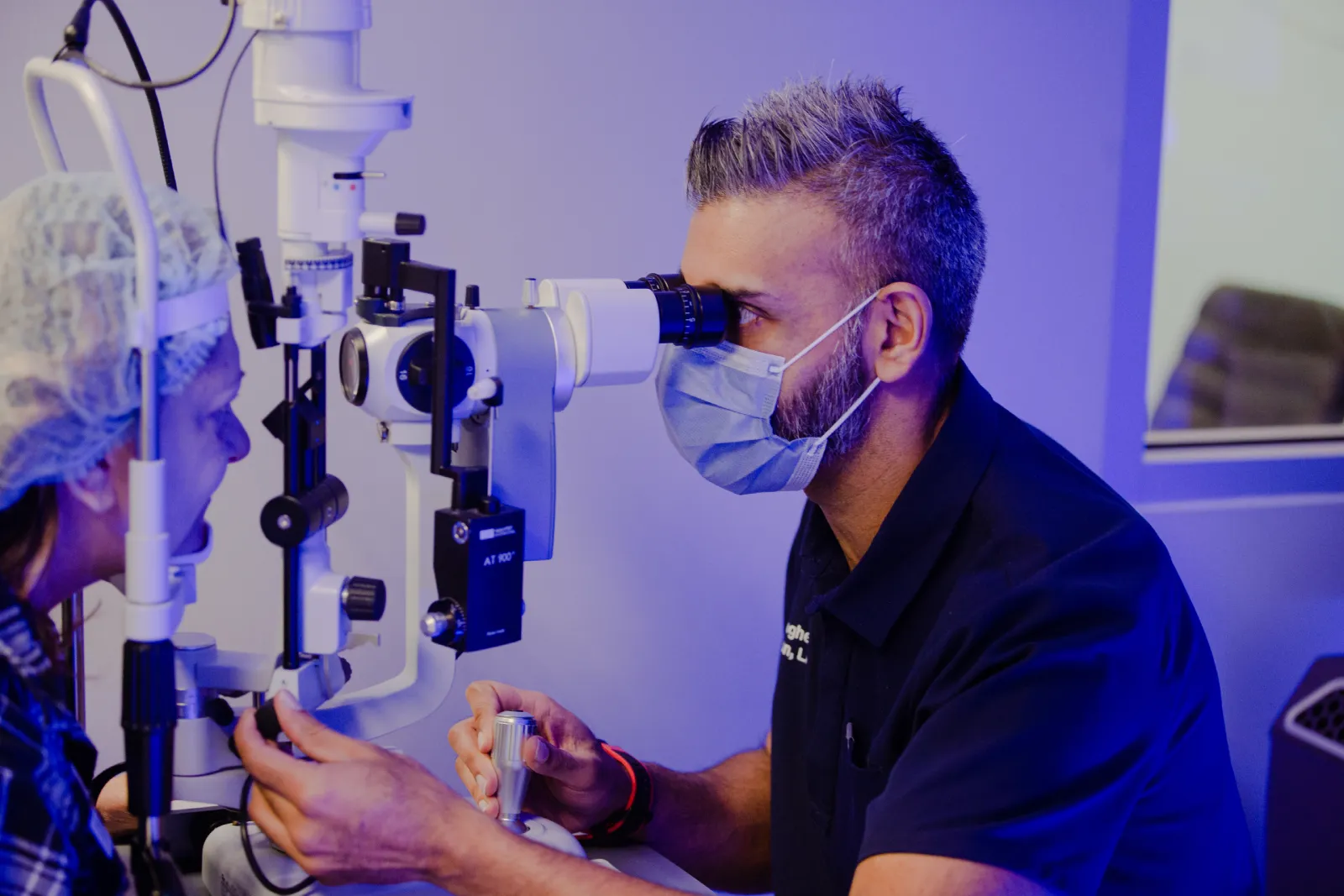
Yes, most patients can fly within a few days after LASIK, provided their early recovery is progressing as expected and their eye surgeon has approved the travel plans.
Commercial air travel does not normally interfere with the changes made to the cornea during LASIK. The more practical considerations are completing your scheduled follow-up, keeping your eyes comfortable in the dry cabin environment and continuing your prescribed eye-drop routine.
If you have a flight planned, share the date and itinerary with your clinical team before surgery. They can recommend timing based on your procedure, recovery and follow-up schedule.
How soon can you fly after LASIK?
There is no single waiting period that applies to every patient. We advise that patients can generally fly within a few days of laser eye surgery.
Your surgeon’s instructions should always take priority because recovery timelines can vary. Before travelling, it is generally helpful to:
- Complete the early postoperative examination recommended by your clinic
- Confirm that your surgeon is comfortable with your travel date
- Make sure the flight will not interfere with follow-up appointments
- Bring enough prescribed eye drops for the entire trip
- Keep your clinic’s contact information with you
LASIK patients commonly notice significant visual improvement soon after treatment. However, vision may still fluctuate during the early recovery period, so allowing a little flexibility around important travel plans can make the experience more comfortable.
Does airplane cabin pressure affect LASIK?
Normal cabin-pressure changes are not generally expected to affect LASIK.
LASIK reshapes the cornea, which is the clear front surface of the eye. The procedure does not ordinarily involve placing a gas bubble inside the eye. Restrictions related to cabin pressure primarily apply to certain operations in which an intraocular gas bubble is used, not to routine LASIK.
Patients who have received another eye procedure in addition to LASIK should ask their ophthalmologist whether different travel guidance applies.
Why might my eyes feel dry while flying?
Aircraft cabins have low humidity. This can increase tear evaporation and make anyone’s eyes feel dry or tired during a flight.
Temporary dryness can also occur while the eyes adjust after LASIK. A flight may therefore make dryness more noticeable, particularly during a longer journey. This is usually a comfort and aftercare consideration rather than a cabin-pressure concern.
Your clinical team may recommend approved lubricating drops as part of your postoperative routine. Lumea’s guide to managing dry eye after LASIK explains why dryness can occur and how it may be managed.

How can I prepare for a flight after LASIK?
A little preparation can help you remain comfortable and follow your normal aftercare routine while travelling.
Keep your eye drops in your carry-on bag
Place prescribed drops and any surgeon-approved lubricating drops in your carry-on luggage. This keeps them accessible during the flight and prevents your routine from being interrupted if checked baggage is delayed.
Keep the drops in their original labelled containers and follow any storage instructions provided by the clinic or pharmacy.
Follow your prescribed schedule
Continue using your drops exactly as directed. For a longer flight or a trip across time zones, ask your clinical team how to maintain the schedule.
Do not add a new eye product simply because you are travelling. Your surgeon can tell you which products are suitable during recovery.
Avoid rubbing your eyes
Recently treated eyes may sometimes feel dry or itchy. Avoid rubbing them and use only the comfort measures recommended by your clinical team.
Redirect the overhead air vent
Direct airflow can make the eyes feel drier. Point the overhead vent away from your face or reduce its airflow.
Bring sunglasses
Eyes can be more sensitive to bright light during early recovery. Sunglasses may improve comfort while moving through bright airport terminals and outdoor areas.
Follow instructions for protective shields
If your surgeon asks you to wear protective eye shields while sleeping, bring them on the trip. Follow the same instructions during an overnight flight that you would follow at home.
Can I take a long-haul flight after LASIK?
A long-haul flight may be possible once your surgeon approves it. The length of the flight does not automatically make it unsuitable after LASIK.
Longer journeys do require additional planning because they involve more time in a dry cabin and may cross several time zones. Before departure, talk to our clinical team about:
- Your planned travel date
- The length of the journey
- Your eye-drop schedule
- Upcoming follow-up appointments
- Any current dryness or irritation
- Aftercare while you are away
Bring enough prescribed medication for the trip, with a reasonable allowance for delays.
Should I complete my follow-up appointment before flying?
Whenever possible, complete the early follow-up recommended by your surgeon before travelling.
This appointment gives the clinical team an opportunity to examine your eyes, answer questions and confirm that your aftercare routine is on track. It also provides an opportunity to discuss your flight and destination.
If your travel dates would cause you to miss an appointment, speak with the clinic before booking. The team may be able to adjust the schedule or recommend a more appropriate travel date.
Should I travel alone after LASIK?
Many patients can travel independently once their surgeon has cleared them to fly. Travelling with another adult may nevertheless be convenient if the trip takes place early in the recovery period.
A companion can help with luggage, airport navigation and transportation while your eyes are adjusting. This may be especially useful when the itinerary includes:
- Connecting flights
- Overnight travel
- A large or unfamiliar airport
- A long journey
- Travel soon after receiving clearance
Whether you need assistance depends on your comfort, vision and itinerary.
Can I sleep during the flight?
Sleeping during the flight is generally possible, but continue following the instructions provided by your surgeon.
If you were given protective shields to wear while sleeping, use them during the flight as directed. The shields can help prevent accidental eye rubbing while you are asleep.
Keep any required drops accessible and consider setting a quiet reminder if a dose is scheduled during the journey.
Should I schedule LASIK immediately before a vacation?
It is usually more convenient to leave time between LASIK and a major vacation. This allows you to complete your early follow-up and become comfortable with your postoperative routine before leaving home.
The destination and planned activities also matter. Your surgeon may temporarily limit activities that could expose the eyes to water, dust or direct contact. Ask about your itinerary if the trip includes:
- Swimming or hot tubs
- Water sports
- Contact sports
- Camping or dusty outdoor settings
- Long periods in very dry environments
Discussing the vacation before selecting a surgery date helps the clinical team recommend a practical schedule.
What if I am a pilot or flight crew member?
Travelling as a passenger is different from returning to professional aviation duties.
Transport Canada has specific medical requirements for pilots following refractive eye surgery. Aviation professionals may need medical review and documentation before resuming their duties.
Pilots, air traffic controllers and flight crew members should follow the requirements of Transport Canada, their employer and any applicable licensing authority. Approval to travel as a passenger does not provide professional medical clearance.
When should I contact the clinic before travelling?
Contact your clinical team if you have questions about how your eyes are feeling, how to use your drops while travelling or whether your itinerary fits your follow-up schedule.
It is especially useful to speak with the clinic if:
- Your flight is scheduled shortly after surgery
- You are taking a long-haul or international flight
- You would miss a scheduled appointment
- Your eyes feel less comfortable than expected
- You are unsure how to manage drops across time zones
- You have received more than one type of eye procedure
The team can determine whether you need an examination or a change to your travel plan.
The bottom line
Most patients can fly within a few days after LASIK once their surgeon confirms that their early recovery is progressing as expected.
Cabin pressure does not normally interfere with LASIK. The main considerations are completing your recommended follow-up, continuing your eye-drop routine and managing possible dryness in the aircraft cabin.
If you are coordinating LASIK with a business trip or vacation, discuss the complete itinerary during your consultation. You can learn more about LASIK eye surgery, review Lumea’s vision-correction candidacy information or arrange a visit at one of Lumea’s Toronto, Vaughan or Barrie clinics.
Frequently asked questions
Can I fly the day after LASIK?
Some patients may be able to travel soon after LASIK, but you should not assume that next-day flying fits your personal follow-up plan. Confirm the timing with your surgeon before booking.
Can cabin pressure undo LASIK?
Normal changes in aircraft cabin pressure are not generally expected to undo or reverse LASIK. The procedure reshapes the cornea and does not ordinarily involve placing a gas bubble inside the eye.
Will flying make my eyes dry after LASIK?
The low humidity inside an aircraft may make temporary dryness more noticeable. Keep surgeon-approved drops accessible and direct the overhead air vent away from your face.
Should I wear contact lenses during the flight?
Do not place a contact lens in a recently treated eye unless your eye-care provider specifically instructs you to do so. Follow the postoperative plan provided by your clinical team.
Can I use eye drops on an airplane?
Yes. Keep your prescribed and surgeon-approved drops in your carry-on baggage so you can follow your normal schedule. Check current airline security requirements before travelling with medications.
Is it better to wear glasses or sunglasses while flying?
Regular glasses may provide a small barrier against direct airflow, while sunglasses can help with light sensitivity in bright environments. Neither replaces the protective shields prescribed for sleeping.
Is flying after PRK the same as flying after LASIK?
PRK has a different surface-healing process and typically a longer early recovery period. Ask your surgeon for instructions specific to PRK rather than applying a LASIK timeline.
How can I confirm that I am ready to fly?
The clinical team responsible for your postoperative care should confirm your travel timing. If you already have a flight booked, contact Lumea and provide your surgery date, flight date and destination.